
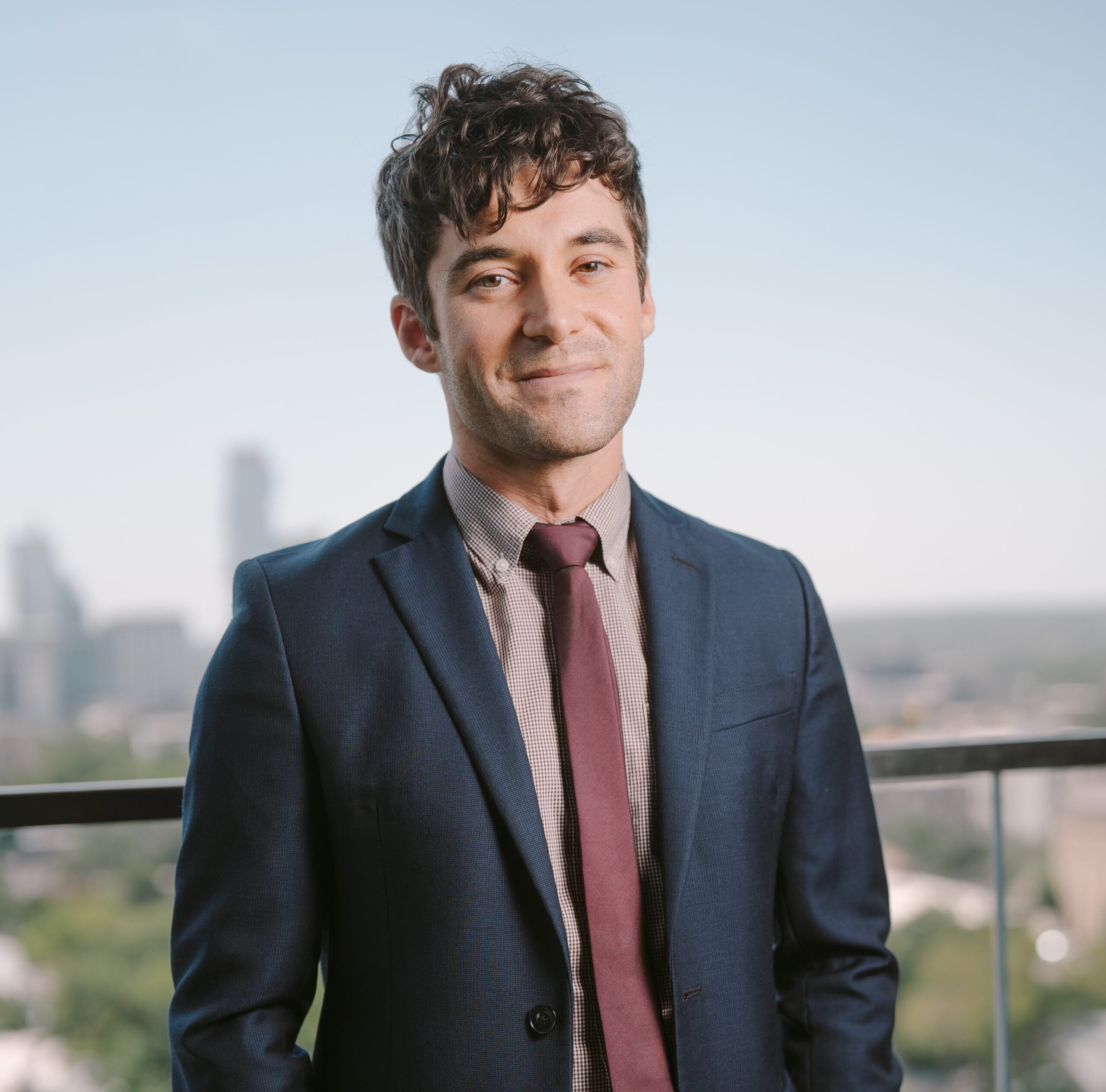
William Whitham
Assistant Professor of Humanities
Office: UTA 6.340
Biography
William Whitham is Assistant Professor of Humanities in the Center for Humanities. Previously, he taught at the Hamilton School for Classical and Civic Education at the University of Florida and at the Committee on Degrees in Social Studies at Harvard University. His research explores the intersection of political ideas, movements, and structures of governance in modern Europe and Russia/Eurasia within a global framework, with a particular focus on histories of radicalism, political violence, and authoritarianism—left, right, and beyond left and right.
Whitham earned his Ph.D. and M.A. in History from Princeton University (2021, 2017), his M.Phil. in Political Thought and Intellectual History from the University of Cambridge (2015) and his B.A. in Social Studies from Harvard College (2014).
Current Projects
Whitham’s current book project, Anarchy Is Order: The Politics of Subversion and the Making of Modern Europe, offers a new political history of European anarchism. Before the rise of communism after 1917, anarchists were the world’s premier rebels. They published a multilingual press on six continents, killed more major leaders than any movement in world history, and, in the wake of the Russian revolution and the First World War, achieved mass followings in Spain, Italy, and beyond before their irreversible decline began in most of the world.
While anarchists have long been derided as agents of chaos or romanticized as opponents of power, Anarchy Is Order explores how they in fact attempted to establish a demanding new political order and to some extent succeeded in doing so, though not in the ways they intended. Opposed to coercion in principle yet committed to overturning states and uprooting capitalism, anarchist militants struggled to create institutions consistent with absolute liberty and equality, appearing at once ineffective and perversely autocratic. They achieved a revolution not in society but in statecraft. Their agitation and assassinations encouraged state officials and right-wing opponents to innovate, midwifing a modern security apparatus and illiberal political alternatives. At the same time, anarchists provided early support to the Bolsheviks, who transmuted revolutionary socialism, anti-statist for a generation, into a novel state form that would govern a third of the twentieth-century world.
Anarchy Is Order recovers a world of daring activists, fumbling police, wary politicians, and innovative authoritarians locked in a bitter competition to build a legitimate order. In tracing that struggle, it reveals how a radical philosophy and movement dedicated to the abolition of authority helped to shape the political institutions of the modern age.
Publications
Articles & Book Chapters
“The colossus with feet of clay: Militant and ‘mass anarchism’ in Spain’s Confederación Nacional del Trabajo, 1910-1923,” Journal of Modern History (forthcoming).
“Lenin, the Anarchist? A Constructive Misinterpretation,” Kritika: Explorations in Russian and Eurasian History 24:3 (2023), 791–816.
“César De Paepe and the ideas of the First International,” Modern Intellectual History 16:3 (2019), 897-925.
“A reconsideration of John Stuart Mill’s account of political violence,” Utilitas 26:4 (2014), 409-431.